

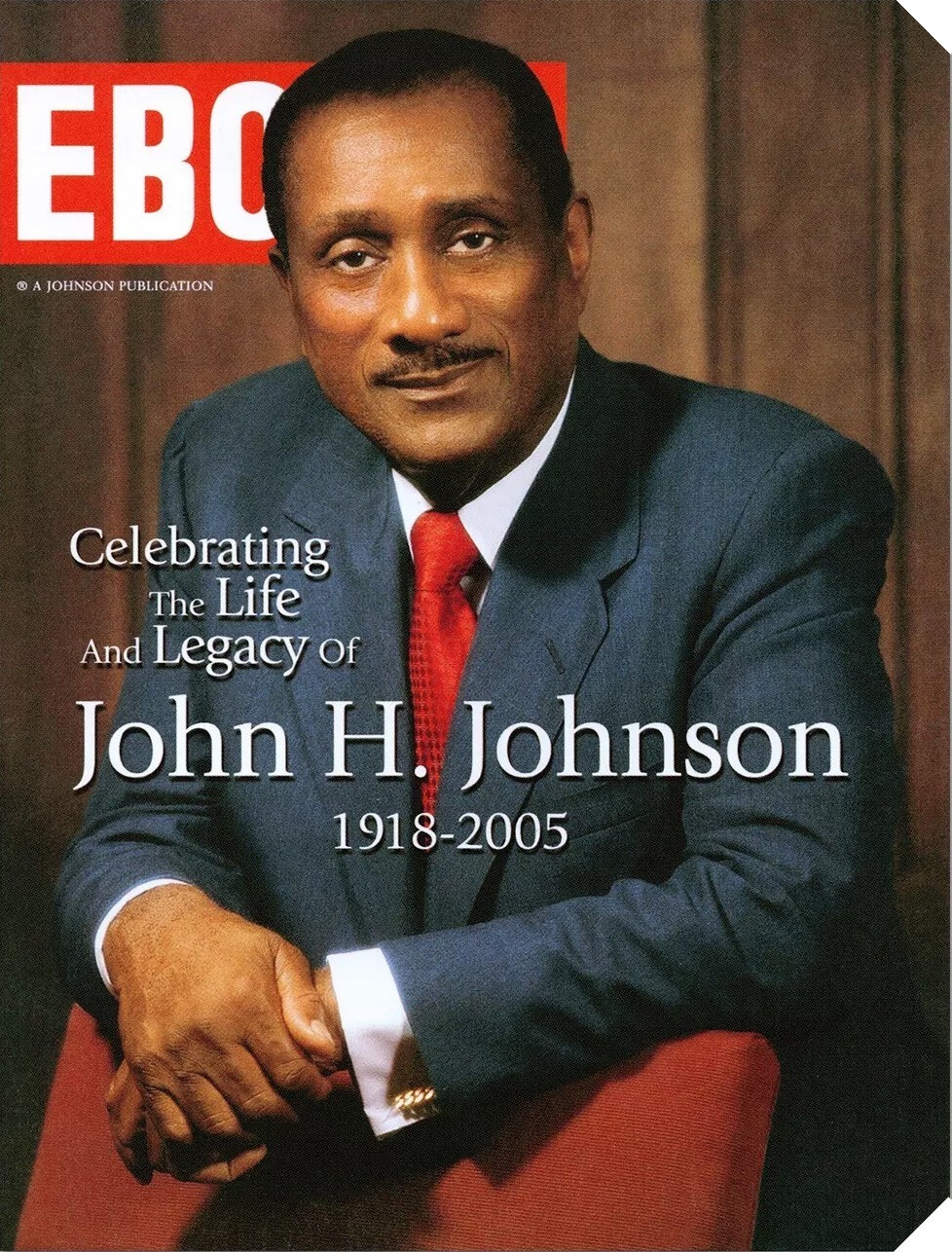
John H. Johnson: A Legacy of Vision and Determination
John Harold Johnson, born January 19, 1918, in Arkansas City, Arkansas, rose from humble beginnings to become one of the most influential figures in American publishing. As the founder of Ebony magazine, Johnson reshaped media representation for African Americans and built a multimillion-dollar empire that celebrated Black culture, achievements, and identity.
Early Life and Education
Raised in a working-class family, Johnson’s childhood was marked by poverty and limited opportunities. His father died when he was six, leaving his mother, Gertrude Jenkins Johnson, to raise the family. Despite financial hardship, Johnson’s mother instilled in him the values of education and perseverance. In 1933, seeking better opportunities, she relocated the family to Chicago’s South Side during the Great Migration.
Johnson thrived academically at DuSable High School, where he served as class president and editor of the school newspaper. He later earned a scholarship to the University of Chicago, where he studied journalism, while simultaneously working at the Supreme Liberty Life Insurance Company. This experience gave him both business acumen and exposure to the African American professional community.
Reflecting on these formative years, Johnson once said, “I wasn’t going to be a part of the generation that waited for white people to recognize our humanity. We were going to assert it.”
Founding Johnson Publishing Company
In 1942, Johnson launched his first publication, Negro Digest, modeled after Reader’s Digest. With just $500 borrowed against his mother’s furniture, he mailed subscription offers to names listed in the insurance company’s database. This direct-mail strategy proved groundbreaking; within a year, the digest had over 50,000 subscribers.
Building on this success, Johnson introduced Ebony magazine in 1945. Inspired by Life magazine’s photojournalism style, Ebony chronicled Black life in America—its triumphs, struggles, and everyday moments—at a time when mainstream media largely ignored or stereotyped African Americans. Johnson’s mission was clear: “I wanted to show the positive side of Negro life—the kind of life nobody had recorded.”
Cultural Impact of Ebony
Ebony quickly became a cultural institution. Its glossy pages featured celebrities, political leaders, athletes, and ordinary individuals, portraying Black excellence and challenging prevailing narratives of inferiority. The magazine highlighted historic milestones, from Jackie Robinson breaking baseball’s color barrier to Dr. Martin Luther King Jr.’s civil rights campaigns.
Johnson understood the power of representation. He explained, “I wanted to create a magazine that Black people didn’t have to see themselves through the eyes of white America. It was important to show our beauty, our achievements, and our aspirations.”
The magazine’s success led to other ventures, including Jet magazine (1951), known for its rapid coverage of current events and unflinching photojournalism—most famously its 1955 publication of Emmett Till’s open-casket funeral, which galvanized the civil rights movement.
Business Acumen and Expansion
Under Johnson’s leadership, Johnson Publishing Company grew into the largest African American–owned publishing firm in the world. Beyond magazines, the company expanded into cosmetics (Fashion Fair), television production, and book publishing. Johnson became the first African American to appear on Forbes magazine’s list of the 400 wealthiest Americans.
He attributed much of his success to persistence and creative problem-solving: “Failure is a word I don’t accept,” he often remarked. “Every time I fail, I just start over again, and each time I get stronger.”
Recognition and Legacy
John Johnson’s contributions earned him numerous honors, including the Presidential Medal of Freedom in 1996. He was inducted into the Advertising Hall of Fame and recognized by the NAACP and numerous civic organizations for his transformative role in American media.
Beyond his accolades, Johnson left a profound legacy: he provided a platform where African Americans could see themselves celebrated, inspired, and empowered. Former Ebony editor Lerone Bennett Jr. once observed, “John Johnson didn’t just publish magazines; he published hope.”
Johnson passed away on August 8, 2005, at the age of 87, but his influence endures in the continued work of Ebony and Jet and in the countless Black media enterprises his vision inspired.
Personal Philosophy
Johnson’s personal quotes reveal his unshakeable belief in self-reliance and dignity:
- “Dream small dreams and you’ll fail small. Dream big dreams and you’ll succeed big.”
- “You can’t rest on your laurels. You have to reinvent yourself every day.”
- “Failure is not fatal. Success is never final.”
These guiding principles not only shaped his career but also continue to resonate with entrepreneurs and changemakers today.