

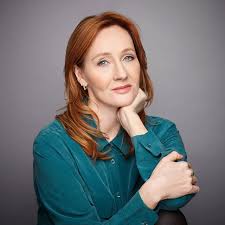
J.K. Rowling: From Hardship to Harry Potter
Joanne Rowling, better known by her pen name J.K. Rowling, was born on July 31, 1965, in Yate, Gloucestershire, England. Today, she is celebrated as one of the world’s most successful authors, renowned for the Harry Potter series that captured the imagination of millions. But before her rise to literary fame, Rowling endured years of profound personal struggle, financial hardship, and even a brush with homelessness—a journey that profoundly shaped both her life and her work.
Rowling’s childhood was modest and sometimes strained. Raised in the English countryside, she developed a love for storytelling early, often inventing fantastical tales for her younger sister. However, her teenage years were marked by her mother’s battle with multiple sclerosis, a loss that would deeply influence her later writing about love, grief, and resilience.
After graduating from the University of Exeter, Rowling moved to Portugal to teach English, where she met and married a Portuguese journalist. The marriage, however, was short-lived and ended amid turmoil. In 1993, Rowling returned to the United Kingdom as a single mother with an infant daughter, Jessica. This period marked one of the lowest points in her life.
Settling in Edinburgh, Scotland, Rowling faced severe financial difficulties. Unemployed and struggling with depression, she lived on government benefits and described herself as being “as poor as it is possible to be in modern Britain without being homeless.” At times, she sought refuge in warm cafes to write because she could not afford to heat her small flat. Although technically housed, she has spoken about living in conditions so precarious that she was on the verge of homelessness.
During this challenging period, Rowling began writing what would become Harry Potter and the Philosopher’s Stone. She famously drafted much of the novel in cafes while her daughter slept beside her in a stroller. Her struggle to provide for her child while clinging to her dream of becoming an author became a central part of her narrative, and it infused her stories with themes of perseverance and hope in the face of adversity.
Rowling’s manuscript was initially rejected by multiple publishers before finally being accepted by Bloomsbury in 1996. The first book’s release in 1997 marked the beginning of an extraordinary transformation. The Harry Potter series would go on to sell over 500 million copies worldwide, spawn blockbuster films, and become a cultural phenomenon.
Reflecting on her hardships, Rowling has often credited them with giving her the determination to succeed and the empathy that permeates her characters’ struggles. Her rise from near destitution to literary icon remains one of the most compelling success stories of modern times—a testament to resilience, creativity, and the power of imagination.