

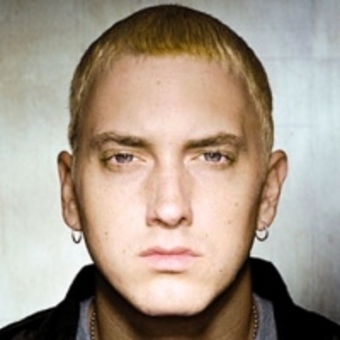
Eminem: From Rock Bottom to Rap Icon
A Difficult Beginning
Marshall Bruce Mathers III, better known as Eminem, was born on October 17, 1972, in St. Joseph, Missouri. His childhood was defined by instability, poverty, and conflict. Raised primarily by his mother, Debbie Mathers, Eminem never knew his father, who abandoned the family when he was an infant. They moved frequently—shuffling between Missouri and Detroit—often living in run-down houses or relatives’ homes.
School offered little refuge. Eminem struggled academically, repeating ninth grade three times before dropping out at 17. He was frequently bullied for being one of the few white kids in his predominantly Black Detroit neighborhood. Music became his escape. “Hip-hop was the only thing that gave me a voice,” he later recalled.
Poverty, Evictions, and Homelessness
In his late teens and early 20s, Eminem pursued rap while working low-wage jobs—dishwasher, cook, factory worker—but the money was never enough. He and his then-girlfriend Kim Scott often lived in near-homeless conditions, moving from one relative’s couch to another.
At times, they slept in their car. Eminem told Rolling Stone:
“There were nights I didn’t know where we were gonna sleep. We’d park somewhere safe, crash for a couple hours, and hope nobody knocked on the window.”
The strain worsened after the birth of their daughter, Hailie, in 1995. Eminem’s biggest fear was not being able to provide for her. “I felt like a total failure,” he said. “I couldn’t even keep the lights on sometimes.”
When he was evicted from a Detroit apartment in the mid-90s, all of his possessions—including his rhyme books—were thrown out. That loss pushed him to work even harder on his music, performing in clubs and entering rap battles for small cash prizes.
The Struggle for a Break
Detroit’s underground rap scene was competitive, and Eminem—often dismissed because of his race—had to prove himself with skill and ferocity. He crafted the “Slim Shady” persona as a way to channel his anger and stand out. But paying gigs were rare.
In 1997, after losing his job at a restaurant and with bills piling up, he reached his lowest point. He attempted to take his own life. Looking back, he told The Guardian:
“Everything hit me at once—being broke, being a father, feeling like I had nothing left. I was so tired of the struggle.”
That same year, he scraped together the money to record the Slim Shady EP, which caught the attention of Dr. Dre. But before that connection changed his life, Eminem was still living in precarious housing, sometimes crashing in basements or spare rooms of friends.
Turning Point
Dr. Dre heard the Slim Shady EP and invited Eminem to Los Angeles. The result was The Slim Shady LP (1999), which became a commercial and critical success, winning Eminem his first Grammy Award. His brutally honest lyrics about poverty, broken families, and desperation resonated with millions.
Despite his sudden fame, Eminem didn’t forget the nights spent with nowhere to go. In “Rock Bottom,” a song from The Slim Shady LP, he rapped:
“My life is full of empty promises and broken dreams
I’m hopin’ things look up, but there ain’t no job openings…”
The rawness of his work came from real experience. “When you’ve been that low,” he told 60 Minutes, “you never forget it. You carry that with you forever.”
From the Streets to Stardom
Eminem’s career exploded with albums like The Marshall Mathers LP (2000) and The Eminem Show (2002). He sold millions of records, won multiple Grammys, and even earned an Oscar for “Lose Yourself” from the film 8 Mile—a semi-autobiographical portrayal of a struggling Detroit rapper living in poverty.
Even with success, he remained outspoken about the realities of poverty and homelessness. In interviews, he has emphasized that talent and hard work aren’t always enough—circumstance and resilience play huge roles. “I just happened to get a break,” he said. “There’s people out there every bit as talented who never will.”
Lasting Impact of Early Struggles
Eminem’s experiences with homelessness left a permanent mark on his music and perspective. He’s used his wealth to help others through the Marshall Mathers Foundation, which supports at-risk youth in Michigan. The foundation has donated to shelters, food programs, and organizations working to prevent homelessness.
He also continues to include autobiographical elements in his songs, ensuring that the grit and truth of his early life remain part of his art. “If I’m not real about what I’ve been through,” he told Rolling Stone, “then what’s the point?”
A Story of Relentless Drive
From a trailer park in Michigan to sleeping in cars, from eviction notices to eviction anthems, Eminem’s path to success was anything but smooth. His story is one of survival as much as artistry—a reminder that even in the bleakest circumstances, persistence and self-belief can create extraordinary change.
As he once put it:
“You can’t let your past hold you back. Use it as fuel. Let it push you.”
Today, Eminem is not only one of the best-selling artists of all time but also a cultural figure whose journey inspires millions who are facing the same struggles he once knew intimately.