

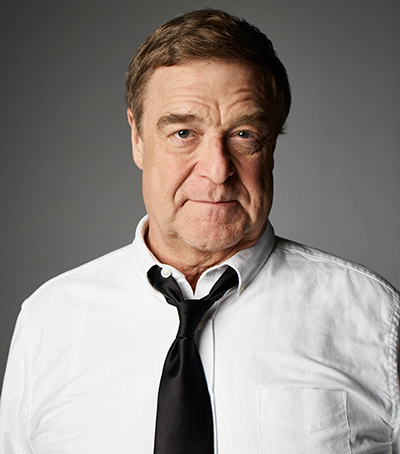
John Goodman: From Risking It All in New York to Beloved Hollywood Stalwart
Missouri Roots and a Rocky Start
John Stephen Goodman was born on June 20, 1952, in Affton, Missouri, a working-class suburb of St. Louis. His father passed away from a heart attack when John was just two years old, leaving behind his pregnant mother, Virginia, who supported the family through multiple jobs—waiting tables, taking in laundry, and working in retail (Biographs, Wikipedia). Goodman often describes feeling alone growing up, shielded somewhat by his older brother but frequently bullied in school due to his weight (Wikipedia). Boy Scouts and early theater work became key outlets and sources of structure in his formative years (Wikipedia).
Leap of Faith—And the Struggle That Followed
After a football injury derailed his athletic aspirations in college, Goodman turned to theater—first at Missouri State University, then on to New York City upon graduation (Wikipedia). He recalls the experience as “frightening,” yet necessary:
“I went straight from school to New York City… I had to go because if I didn’t, I would kick myself in the rear end for the rest of my life.” (People.com)
He survived on odd jobs and bar gigs, taking on small theater roles and commercials—anywhere he could earn money to keep his dream alive (Distractify, BUHAVE). For a time, his life hovered near the edge; Goodman has described borrowing $1,000 from his brother just to afford his early years in the city, during which he risked eviction and real instability (Distractify).
Breakthrough on Broadway and the Road to Roseanne
Goodman made his Broadway debut in the musical Big River in 1985, earning early recognition and a Drama Desk Award nomination (Wikipedia). Still, work remained irregular until 1988 when he landed the role of Dan Conner on Roseanne—a turning point that transformed both his career and personal life (People.com). The role quickly made him a household name and solidified his place in Hollywood.
Battles Behind the Curtain
Despite booming success, Goodman battled with addiction and depression in private. He openly acknowledges that for years, alcohol clouded his mind and made executing lines difficult. Describing an emotional low point:
“I got complacent and ungrateful… I handled it like I did everything else, by sittin’ on a bar stool. And that made it worse.” (Distractify)
By 2007, he reached a turning point. After a shake-up during Roseanne and several early warning signs, Goodman checked into rehab:
“It was getting to be too much… It was 30 years of a disease that was taking its toll… life or death. It was time to stop.” (Distractify)
Post-rehab, Goodman lit a sustained path toward sobriety.
Managing Health and Self-Reclamation
Goodman’s struggles extended beyond addiction. He has spoken candidly about ongoing battles with depression—describing it as “a chemical thing, a brain thing” that left him having days when “nothing seems right” and lacking will to begin any task (Today Daily Times). Through therapy, discipline, and weight loss—over 200 pounds shed since 2007—he rebuilt not just his health, but also his sense of control and identity:
“It takes a lot of creative energy to sit on your ass and figure out what you’re going to eat next… I wanted to live life better.” (Distractify)
Career Renaissance and Enduring Legacy
Even while working through personal challenges, Goodman became one of the most trusted and dynamic character actors of his generation—mastering comedy (Roseanne), drama (Argo), voice work (Monsters, Inc.), and indie brilliance (The Big Lebowski) (biographyhost). Longtime collaborator Joel Coen once noted that Goodman fit so organically into The Big Lebowski cast that it felt as if he “wandered off the street” and seamlessly joined the creative mix (PBS).
Today, Goodman continues to work steadily, including reprising Dan Conner in The Conners and voicing iconic characters. He maintains his sobriety, manages his health proactively, and remains grounded in humility and realism.
Reflections on Struggle and Survival
In many ways, Goodman’s early fear in New York, his near‑destitution, and his battle with alcoholism were all parts of the same journey—one of survival and self-discovery. Looking back, he embraces the lessons those low points taught him:
“I kind of knew I could do this… I gravitated toward whatever was offered and tried to make the best of that.” (People.com)
Goodman’s story—from a fatherless child and insecure teen to a struggling New York actor facing near homelessness, then a sitcom star, then a man facing health and addiction—illuminates what can happen when talent meets resilience. He built a career through authenticity, groundedness, and the refusal to be defined by his worst moments.
Summary Timeline
| Phase | Challenge | Resolution |
|---|---|---|
| Childhood | Loss, bullying, lack of role models | Found structure through theater |
| Early Career | Near-homelessness in NYC | Accepted every opportunity |
| Fame & Struggle | Addiction and depression | Rehab and sobriety |
| Reinvention | Health and mental wellness | Weight loss, therapy, focus |
| Legacy | Prized versatile actor | Continues performing & inspiring |