

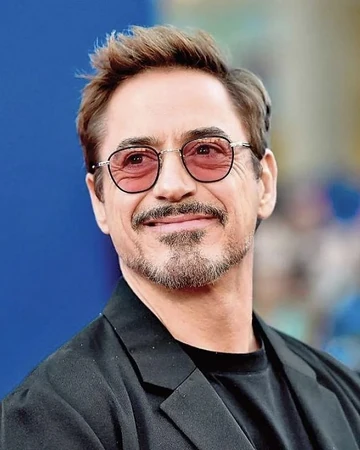
Robert Downey Jr.: From Turmoil to Triumph
Robert Downey Jr., born April 4, 1965, in New York City, is widely celebrated for his magnetic performances and remarkable personal comeback. Best known for roles in Chaplin (1992) and as Marvel’s Iron Man, Downey’s life story is one of extraordinary talent tempered by deep struggles with addiction, legal troubles, and even periods of homelessness—followed by one of Hollywood’s most inspiring reinventions.
Early Life and Introduction to Acting
Downey Jr. was born to avant-garde filmmaker Robert Downey Sr. and actress Elsie Ann Ford. Growing up in Greenwich Village, he was exposed to the entertainment world from an early age, appearing in his father’s films, including Pound (1970), at just five years old.
However, his unconventional upbringing also introduced him to substance use alarmingly early. His father, himself a drug user, allowed young Robert to experiment. Reflecting on this painful chapter, Downey Jr. later admitted:
“When my dad and I would do drugs together, it was like him trying to express his love for me in the only way he knew how.”
This early exposure planted the seeds for struggles that would follow him into adulthood.
Rising Stardom in the 1980s and 1990s
After dropping out of high school and moving to Los Angeles, Downey joined the cast of Saturday Night Live (1985–1986) and soon broke into film. He gained acclaim in roles such as Less Than Zero (1987), portraying a cocaine-addicted rich kid—a part disturbingly close to his real-life experiences.
His career skyrocketed in the early 1990s, culminating in an Academy Award nomination for his portrayal of Charlie Chaplin in Chaplin (1992). Critics praised his uncanny performance and physical transformation. Downey Jr. himself later reflected:
“Playing Chaplin was the first time I realized how far I could go as an actor—and how much discipline it required.”
Addiction, Arrests, and Homelessness
Despite professional success, Downey’s personal life unraveled amid escalating drug abuse involving cocaine, heroin, and alcohol. Between 1996 and 2001, he faced multiple arrests for drug possession, weapons charges, and repeated probation violations. His public struggles led to stints in jail and mandatory rehabilitation programs.
During one particularly dark period, Downey found himself homeless, wandering Los Angeles without direction. He later recalled:
“I was a guy with a gun in my mouth, and I liked the taste of metal. I had reached a point where I didn’t want to keep living the way I was living.”
His downward spiral cost him roles and relationships, including the end of his first marriage to actress Deborah Falconer. Studios deemed him uninsurable, and his once-promising career appeared over.
Turning Point and Recovery
Downey’s path to recovery began in 2003, catalyzed by his relationship with film producer Susan Levin (whom he later married). Determined to reclaim his life, he committed to sobriety through therapy, meditation, martial arts, and 12-step programs. He credits Levin as a key influence, famously stating:
“The old saying is true: Behind every successful man is an incredible woman. Susan really turned things around for me.”
He also embraced personal responsibility, once noting:
“I have a sense of destiny, but I don’t believe in fate. You create your own reality.”
The Iron Man Comeback
In 2008, Downey Jr. staged one of Hollywood’s greatest comebacks with Iron Man, portraying genius billionaire Tony Stark. The film’s success launched the Marvel Cinematic Universe and reintroduced Downey to global stardom. His charismatic performance and personal parallels with Stark—a flawed man seeking redemption—resonated deeply with audiences.
Downey reprised the role in multiple Marvel films over the next decade, becoming one of the highest-paid actors in the world and a cultural icon. Reflecting on this turnaround, he said:
“Remember that just because you hit bottom doesn’t mean you have to stay there.”
Continued Success and Reinvention
Beyond Marvel, Downey earned acclaim for Tropic Thunder (2008), Sherlock Holmes (2009) and its sequel, and more recent dramatic roles. His ability to oscillate between blockbuster action and nuanced drama underscored his enduring versatility.
Off-screen, he became an advocate for recovery and personal transformation, often sharing his story to inspire others battling addiction. He’s also been active in philanthropy, supporting environmental and children’s charities.
Legacy and Lessons
Robert Downey Jr.’s life embodies the duality of human potential—how talent can be both amplified and imperiled by personal demons. His recovery stands as one of Hollywood’s most public and inspiring second acts. Central to his philosophy is accountability and hope:
“Worrying is like praying for something you don’t want to happen. Focus on what you want instead.”
Downey’s story reminds us that redemption is possible, no matter how far one falls.
Conclusion
From the chaos of addiction and homelessness to the heights of superstardom, Robert Downey Jr.’s journey is a testament to resilience and reinvention. His candidness about his struggles humanizes his triumphs, inspiring millions to believe in second chances. As he once reflected:
“Remember, you’re not defined by your mistakes—you’re defined by what you do about them.”